Table of Contents
- Understanding SEO Techniques
- The Impact of Social Media Presence
- Evaluating Return on Investment
- Combining Strategies for Maximum Success
Understanding SEO Techniques
The Basics of SEO
From my years in the marketing field, I can confidently say that a solid grasp of SEO is crucial for any digital marketer. SEO, or Search Engine Optimization, is all about making sure your content gets found when people are searching for it online. At its core, SEO involves optimizing web pages so they rank higher in search engine results pages (SERPs).
Now, why should SEO matter to you? Well, for starters, it determines how easily your potential customers can find you amidst the online noise. Effective SEO can drive organic traffic and increase your website’s visibility, much like how a well-placed stand at a busy market would attract more foot traffic.
Remember, while search engines like Google use complex algorithms to rank pages, the essence of SEO is understanding what your audience is searching for and making sure you offer valuable content. This means ensuring your page titles, meta descriptions, and keywords align with the needs and interests of your target customers.
Advanced Techniques for SEO Optimization
Moving beyond the basics, let’s dive into some advanced techniques that can really up your SEO game. Firstly, it’s crucial to focus on content quality. High-quality, relevant content not only pleases your audience but is also favored by search engines. This includes regularly updating your content to keep it fresh and engaging.
Second, don’t underestimate the power of backlinks. These are links from other credible sites back to your own. Think of backlinks as endorsements; the more reputable sites link to yours, the more trustworthy your content appears in the eyes of search engines, which can boost your rankings.
Lastly, delve into the world of analytics to track your SEO efforts. By analyzing traffic data, you can identify which strategies are working and which ones need tweaking. This continuous assessment and adjustment are what separates the SEO pros from the rookies.
Common Mistakes to Avoid
Everyone makes mistakes, but in SEO, some errors can cost you big time. One common blunder is keyword stuffing; cramming your content with too many keywords can actually hurt rather than help your rankings. Search engines might see this as spammy, and that’s the last thing you want.
Another common pitfall is neglecting mobile optimization. With the increasing number of users accessing content via their smartphones, having a mobile-friendly site is no longer optional – it’s a must. Failing to optimize for mobile can lead to a poor user experience and negatively impact your SEO.
Lastly, don’t overlook the importance of a proper site structure. A well-organized website makes it easier for search engines to crawl, leading to better indexing and ranking. Ensure that your site is easy to navigate with logical URL structures and descriptive page names.
The Impact of Social Media Presence
Building Brand Awareness
When it comes to social media marketing, one of the first things you’ll notice is its power in building brand awareness. Having a robust social media presence helps your brand get noticed by a larger audience. Think of social media platforms as massive virtual billboards, where you can showcase your brand’s personality and values.
Sharing engaging content such as videos, infographics, and personal stories can resonate with your audience, making your brand more memorable. This kind of engagement forms an emotional bond with your potential customers, which is a goldmine for future loyalty.
Moreover, available tools for social media analytics allow you to measure how successful your efforts are in reaching and impacting your audience, helping you tailor your strategies to better appeal to your specific market.
Driving Customer Engagement
If there’s one thing social media excels at, it’s fostering customer engagement. This is the place where you can directly interact with your audience in real-time. Responding to comments, sharing user-generated content, and hosting live Q&A sessions can significantly boost interaction.
These interactions provide a platform for your audience to express their sentiments, preferences, and feedback openly. This is invaluable information that can help guide your marketing strategies and even product development.
One of the key advantages here is that social media puts a human face on your brand. Sharing behind-the-scenes content and engaging in authentic conversations help in building trust and community around your brand, which can lead to long-term customer relationships.
Leveraging Influencer Partnerships
Partnering with influencers is another powerful way to maximize your social media presence. Influencers have the ability to sway their large following’s opinions, and aligning with the right influencer can extend your brand’s reach beyond your existing audience.
It’s important to collaborate with influencers who align with your brand values and whose audience would genuinely be interested in your product or service. This ensures the authenticity of the endorsement and enhances the chances of converting followers into customers.
Coupling influencer partnerships with targeted advertising can exponentially increase your brand’s visibility. Remember, the goal here is to cultivate genuine connections rather than simply chasing numbers, leading to more meaningful interactions and sustainable growth.
Evaluating Return on Investment
Calculating SEO ROI
Calculating the return on investment (ROI) for your SEO efforts can be a bit tricky but is essential for understanding its effectiveness. You’ll want to track various metrics, such as organic traffic, conversion rates, and keyword rankings, to gauge success.
Tools like Google Analytics can be incredibly helpful in collecting this data and visualizing the overall picture of your SEO performance. By evaluating this data, you can identify trends and areas for improvement, ensuring you’re getting the most bang for your buck.
Ultimately, a positive SEO ROI indicates that your strategies are working effectively, drawing in more traffic, and generating more leads or sales than what was invested in optimizing your site.
Measuring Social Media ROI
Determining the ROI of social media marketing requires a slightly different approach. It often involves looking at engagement metrics such as likes, shares, comments, and clicks. Each platform provides its own analytics tool to help track these interactions.
Understanding what these metrics mean for your business goals is vital. Not all social interactions directly translate to sales, but they do reflect brand awareness and customer engagement growth.
Setting clear, achievable goals before launching social media campaigns will give you benchmarks to measure against. This can be anything from increasing followers to driving traffic to your site, helping you assess whether your strategies are delivering value.
Balancing Investments
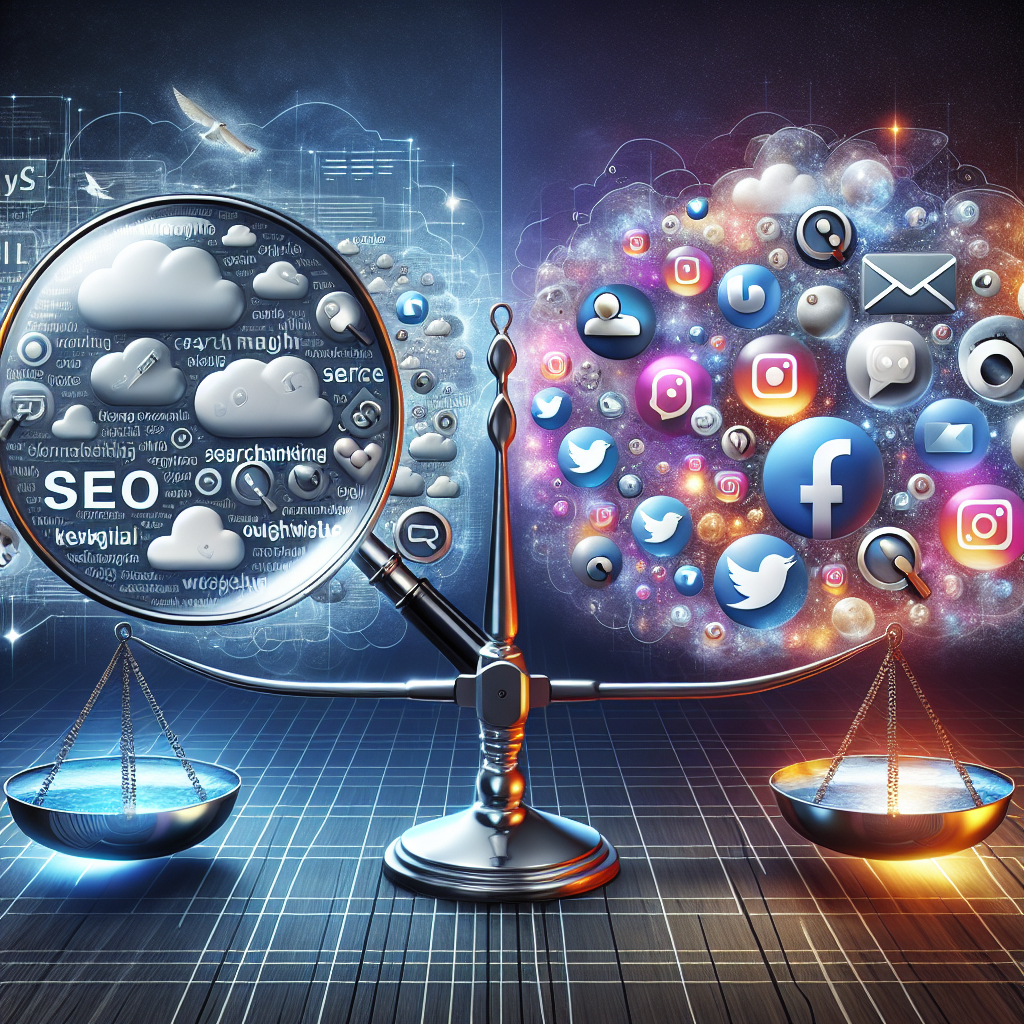
When it comes to budgeting for SEO and social media, it’s all about balance. While both can offer substantial returns, over-investing in one area can lead to diminishing returns. The trick is to find the right mix that suits your business needs.
Consider your target audience and which platforms they frequent. If your audience spends more time on social media, it might make sense to invest more resources there. Conversely, if your business relies heavily on search engine traffic, allocating more towards SEO could show better results.
Ultimately, regularly revisiting your ROI for both SEO and social media will help you adjust your strategies and budget effectively, maximizing the overall impact on your business.
Combining Strategies for Maximum Success
Integrating SEO with Social Media
Integrating SEO with social media can create a powerhouse for your marketing strategy. By aligning your social media content with your SEO objectives, you can amplify your brand’s reach and visibility across the web.
For instance, sharing optimized blog posts on social media can drive traffic back to your site and increase engagement while improving your SEO rankings. Using keywords in your social posts and profiles can also enhance your search visibility.
The synergy between SEO and social media isn’t just about increased visibility; it’s an opportunity to create a consistent message across platforms, reinforcing your brand identity and ensuring your customers receive a unified experience.
Cross-Promotional Strategies
Cross-promotion between social media and SEO means using each channel to promote the other. A well-timed tweet with a link to a blog on your website can drive visitors to your site, while a blog featuring a social media post can direct readers to your social profiles.
This strategy enhances your reach by catering to different segments of your audience. Some may prefer the in-depth nature of blogs and content on your site, while others may appreciate the immediacy and brevity of social media updates.
Ultimately, the goal is to create a cohesive cycle of promotion that keeps your audience engaged across all channels, continuously attracting both new and returning visitors.
Evaluating the Combined Impact
Evaluating the impact of integrating both SEO and social media requires keeping an eye on various metrics across platforms. This includes measuring site traffic from social media channels, social engagement metrics, and traditional SEO metrics like keyword rankings.
This comprehensive approach allows you to see the full picture of how well your integrated strategies are performing. Look for trends that indicate synergy, such as increases in engagement correlating with raised search engine rankings.
Regularly assessing the results of your combined efforts ensures you’re optimizing your marketing strategies in a way that’s cohesive and effective, continuously driving towards overall business growth.
FAQs
1. What is the main difference between SEO and social media marketing?
The main difference lies in their approach: SEO focuses on increasing organic visibility through search engines, while social media marketing engages audiences on social platforms to build brand awareness.
2. Can SEO and social media marketing be used together effectively?
Absolutely! When used together, they complement each other by boosting visibility and engagement across multiple channels, creating a more comprehensive marketing approach.
3. Which is more cost-effective: SEO or social media marketing?
This depends on your business goals and target audience. SEO might offer better long-term cost savings, whereas social media provides faster engagement and reach, especially for time-sensitive campaigns.
4. How can I measure the success of my SEO and social media efforts?
Success can be measured by tracking various metrics such as organic traffic for SEO and engagement metrics like likes and shares for social media. Tools like Google Analytics and platform-specific insights can provide valuable data.