Search Engine Optimization Strategies
Building a Strong Foundation with Keywords
Let’s get one thing straight—keywords are the backbone of SEO. When I got started, the first lesson was understanding that keywords are what connect our content to what people are searching for. The key is finding the right keywords that align with the audience’s intent.
When doing keyword research, I use tools like Google Keyword Planner or SEMrush. These tools help me see what people are searching for and how competitive each keyword is. I learned to look for a sweet spot where the search volume is high enough to be worth targeting but not so high that the competition is fierce.
It’s not just about filling your content with any keyword; it’s about placing them strategically. I aim for a natural sounding usage in titles, headers, and throughout each piece. Stuffing never worked for anyone and today it’s a surefire way to get a penalty from search engines.
On-Page Optimization Techniques
After dialing in keywords, I dive into crafting engaging meta tags and descriptions. This reminds me of sprucing up your house before a party. A well-written title tag and meta description can entice searchers to click your link over others on the search results page.
Another vital aspect is optimizing images with alt-text and ensuring your pages load fast. Nothing turns a visitor away quicker than a sluggish site. When it comes to on-page SEO, speed is crucial. I use tools like Google PageSpeed Insights to test and optimize page loading times.
You also can’t overlook internal linking. I find that it helps not only with SEO but also with guiding visitors through your content. Think of it as leaving a trail of breadcrumbs, leading them deeper into your website, which boosts the time spent on site and decreases bounce rates.
Creating High-Quality Content
Content is king, as the saying goes. My approach to content creation is simple: provide value. Think of it like offering your audience a five-star meal. I focus on creating in-depth, informative content that meets the needs of my audience.
A great piece of content answers questions or solves problems. Before I write, I always consider what my audience wants to know and tailor the content to their needs. This approach builds authority and trust over time.
Storytelling is another powerful tool. I interweave stories with facts, making the content more relatable. It’s like adding a dash of joy in an otherwise straightforward piece, keeping readers engaged and coming back for more.
Understanding Search Engine Marketing
Basics of Paid Advertising
SEM is all about leveraging paid advertisements to increase visibility in search engine results. I remember when I first dipped my toes in paid ads—I felt like a kid in a candy store, with so many options at my fingertips!
Pay-per-click (PPC) is the most common form of SEM. It lets you place ads in search results, but you only pay when someone clicks on them. Setting these up involves understanding ad auction dynamics, quality scores, and bidding strategies. It’s like a strategic game, and once you get it right, it can significantly elevate your brand’s presence.
Remember, although SEM offers quick visibility gains, it can be costly if not managed well. Working with platforms like Google Ads and exploring alternative ad networks can help stretch your budget while optimizing performance.
Targeting and Audience Segmentation
One of the perks of SEM is the ability to target specific audiences through demographic, geographic, and psychographic data. I think of it as finding the needle in the haystack—when done right, it can reach precisely those people most likely to convert.
Audience segmentation goes hand-in-hand with ad targeting. Keywords help reach potential customers, but segmentation refines that reach. It’s a matter of getting to know your audience, understanding their needs, and crafting messages that resonate.
This level of precision allows personalized ads that speak directly to user interests, increasing the likelihood of conversion. It’s an ongoing process of refining strategies based on performance data, consistently optimizing for the best ROI.
Measuring and Analyzing Performance
In the world of SEM, data analysis is your best friend. Once the campaigns are running, I spend a fair amount of time reviewing metrics like CTR (Click-Through Rate), CPC (Cost-Per-Click), and overall conversion rates to gauge performance.
Utilizing tools like Google Analytics provides insights into what’s working and what needs tweaking. It’s a lot like adjusting the sails of a boat—sometimes the wind changes, and so must your tactics to stay on course.
With SEM, the critical part is not just collecting data but interpreting it effectively. Each campaign provides learning opportunities, helping you tailor future strategies more effectively for sustained success.
Comparative Analysis of SEO and SEM
Cost Implications
One of the first things to consider when comparing SEO and SEM is cost. Back when I started, I figured SEO was the cheaper option since it primarily involves an investment in time and resources, rather than direct financial outlay.
Despite the lack of initial cash expense, successful SEO demands expertise, tools, and often, a skilled team. SEM, on the other hand, involves immediate costs but offers quicker results, acting like a tactical sprint compared to SEO’s marathon.
The choice between investing in SEO or SEM often comes down to a mix of budget considerations and desired speed of visibility. Balancing both can provide a dynamic strategy that drives short-term results and long-term growth.
Long-Term vs. Short-Term Gains
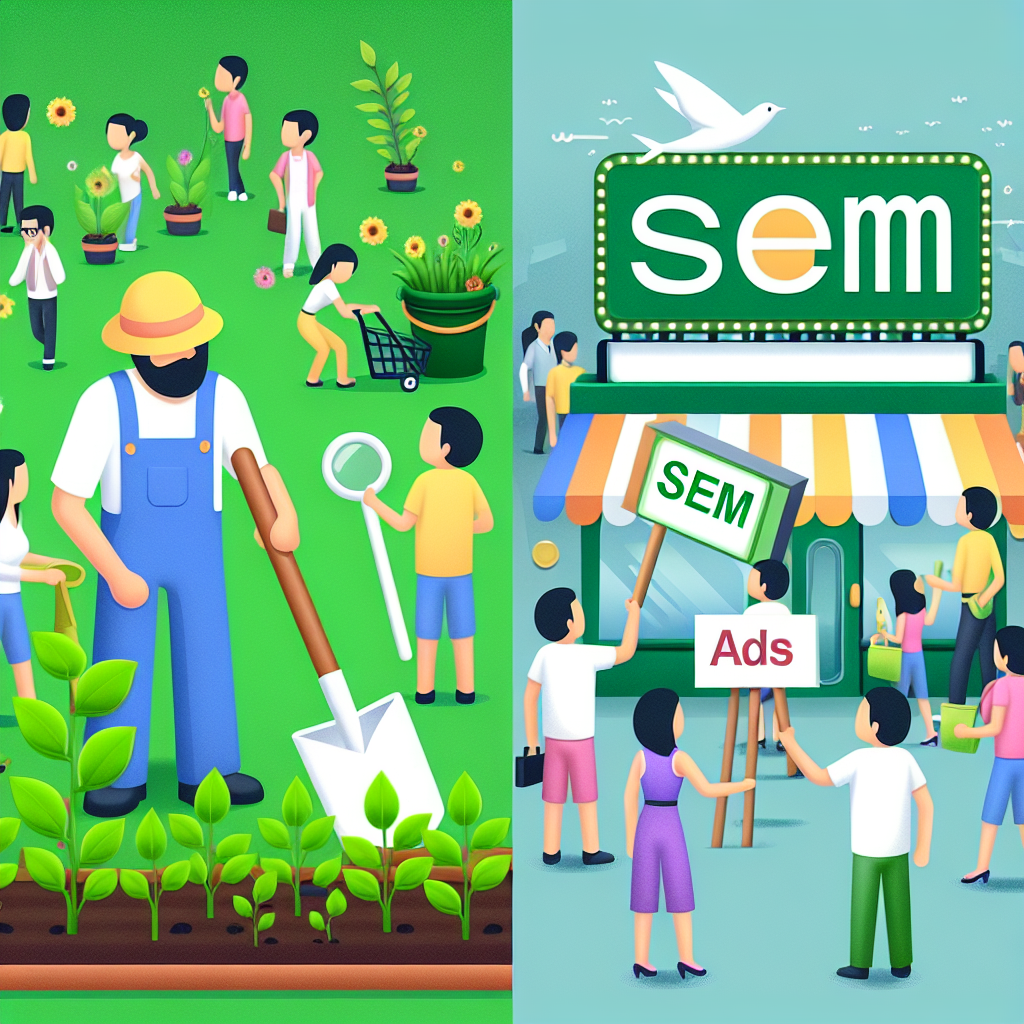
At its core, SEO is about playing the long game. The changes you make today might take several months to yield significant results. It’s like tending a garden—the effort is consistent, but the blooms are worth it.
In contrast, SEM is akin to lighting a match—it’s immediate. Need to boost traffic for a launch or event? SEM can deliver fast, targeted results. It complements SEO by generating instant traffic while you work on your organic presence.
Balancing SEO with SEM strategies can ensure immediate visibility and continuous long-term growth, providing a well-rounded approach to get the best of both worlds in digital marketing.
Performance and Adjustability
Performance monitoring is critical in both SEO and SEM, but the ability to adjust strategies quickly is more comfortable with SEM. The iterative nature of SEM allows for dynamic changes, responding to sudden market shifts or competitive movements.
SEO, while adjustable, tends to react slower to changes due to its nature. It requires patience and persistence, as search engines take time to reflect updates. It’s like steering a large ship; course corrections are gradual but impactful.
For me, leveraging the adaptive nature of SEM while maintaining the steady growth of SEO creates a resilient marketing strategy. Both require close monitoring and analysis to ensure long-term success and adaptability in the face of ever-changing digital landscapes.
Effective Digital Marketing Techniques
Integrated Marketing Strategies
SEO and SEM shouldn’t exist in silos—an integrated strategy aims to bring the best of both together. When I plan campaigns, I ensure each component works harmoniously, enhancing overall effectiveness and reaching broader objectives.
This integration means using social, content, and email marketing alongside SEO and SEM. It’s a holistic approach where each element supports and amplifies others. Think of it like a well-oiled machine, where all parts must work in unison for optimal performance.
Such multidimensional strategies can be a game-changer, providing both breadth and depth in digital reach which amplifies your brand’s voice in crowded marketplaces.
Utilizing Data for Insights
Data plays a pivotal role in modern marketing strategies. From my experience, the key to unlocking long-term success lies in analyzing past and current performance trends. It’s like a map showing you the path to your goal.
Regularly analyzing key performance indicators (KPIs) and insights allows me to refine my strategies, ensuring they stay aligned with business objectives and market dynamics. It’s a learning process, continually honing in on what works best.
Embracing data literacy among teams can enhance this process, ensuring insights are actionable and readily adapt to changing conditions. It’s about creating an informed strategy, not just one based on gut feeling or initial assumptions.
Leveraging Market Trends
Staying ahead requires keeping a keen eye on market trends and evolving consumer behaviors. I spend time regularly researching industry reports and engaging with thought leaders to ensure strategies are informed by the latest insights.
Recognizing trends early allows for proactive adaptation, transforming challenges into opportunities. This keeps campaigns innovative and engaging for audiences who are always looking for what’s next.
Building flexibility into digital marketing strategies ensures they remain robust despite the rapidly shifting digital landscape. This ongoing innovation helps maintain relevance and keeps brands at the forefront of consumers’ minds.
FAQ
What is the primary focus of SEO?
The primary focus of SEO is to improve organic visibility in search engines by optimizing web pages through strategic use of keywords, high-quality content, and effectively managing technical SEO elements.
How is SEM different from SEO?
SEM involves paid strategies to gain visibility in search engine results pages, such as PPC ads, where businesses pay for clicks on their ads. SEO, however, focuses on organic strategies without direct payment to the search engines.
Can SEO and SEM be used together effectively?
Absolutely! Using SEO and SEM together offers the best of both worlds: SEO provides long-term organic growth, while SEM provides immediate visibility and traffic. This dual approach can create a more comprehensive marketing strategy.
What tools are helpful for measuring SEO and SEM performance?
Tools like Google Analytics, SEMrush, and Google Ads are invaluable for measuring and analyzing performance in both SEO and SEM. They offer insights into traffic patterns, user engagement, and the effectiveness of keywords and ads campaigns.